
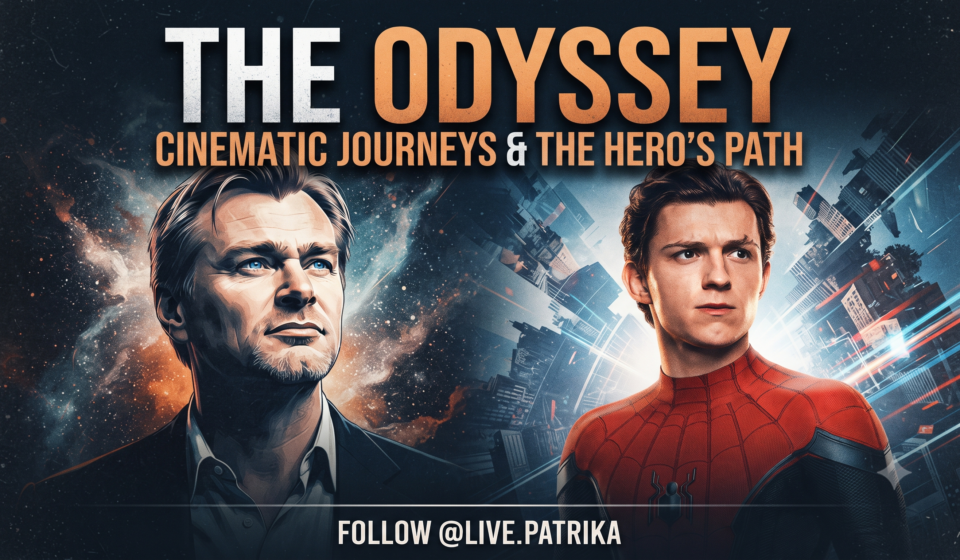

The concept of “The Odyssey” has transcended its ancient Greek origins to become a foundational archetype in modern cinema. It represents the quintessential hero’s journey—a long, wandering, and often perilous voyage filled with trials, transformation, and ultimate discovery.
In the landscape of 21st-century filmmaking, directors and actors are constantly seeking new ways to reinterpret this classic narrative structure. Whether through the lens of expansive sci-fi epics or grounded, character-driven dramas, the odyssey remains the most effective tool for exploring the human condition.
Key Takeaways
- The Hero’s Journey: How ancient narrative structures continue to dominate the box office.
- Visionary Direction: Exploring how directors like Christopher Nolan reshape epic storytelling.
- The Modern Protagonist: Analyzing the evolution of the hero through stars like Tom Holland.
- The Psychological Odyssey: Moving beyond physical travel to internal character transformation.
- Future Trends: How technology and audience expectations are changing the nature of cinematic epics.
The Anatomy of a Modern Odyssey
At its heart, an odyssey is defined by distance and change. The physical trek is merely a backdrop for the protagonist’s internal shift. In contemporary cinema, this has evolved into complex, non-linear narratives that challenge the audience to keep pace.
Defining the Cinematic Voyage
A modern odyssey requires three distinct components:
- The Call to Adventure: The inciting incident that forces the protagonist out of their comfort zone.
- The Crucible: A series of tests, allies, and enemies that strip away the hero’s illusions.
- The Return: The hero comes back changed, carrying a new perspective or a “boon” for their community.
Why Audiences Crave the Epic
We are hardwired to resonate with stories of struggle and triumph. In an era of digital saturation, high-stakes storytelling offers a sense of weight and consequence that feels increasingly rare in everyday life.
Directorial Mastery: The Scope of Christopher Nolan
Few directors today understand the mechanics of the epic quite like Christopher Nolan. Nolan’s work is characterized by a “cognitive odyssey,” where the audience is not just watching a journey but actively participating in the puzzle of the narrative.
Temporal Distortion as a Narrative Tool
Nolan often uses time itself as the antagonist. By stretching, folding, or reversing the timeline, he turns a standard journey into a complex investigation of human memory and regret.
- Inception isn’t just a heist film; it is a subconscious odyssey.
- Interstellar uses the vastness of space to ground a deeply intimate story about fatherhood.
The Scale of Spectacle
For Nolan, the odyssey is never small. He utilizes practical effects and massive sets to create a sense of tangible reality. When the environment feels real, the stakes of the hero’s journey feel exponentially higher.
The New Guard: Tom Holland and the Relatable Hero
While directors provide the framework, the actors provide the pulse. Tom Holland represents a shift away from the “invincible” archetype toward something much more vulnerable and resonant.
The Evolution of the Spider-Man Odyssey
Holland’s portrayal of Peter Parker effectively captures the “Hero’s Journey” in a coming-of-age context. His odyssey isn’t just about fighting villains; it is about the agonizing balance between personal morality and immense responsibility.
- Vulnerability: Holland excels at portraying the internal fear that accompanies grand duties.
- Growth: We see a clear, linear trajectory from the awkward teenager in Homecoming to the seasoned, weary hero in No Way Home.
Why Vulnerability Wins
Modern audiences are tired of flawless heroes. By grounding the epic journey in the awkward, relatable struggles of a young person, actors like Holland make the “odyssey” feel accessible rather than mythological.
The Psychological Interior: Moving Beyond Space and Time
The most compelling odysseys are those that occur within the mind. When we strip away the explosions and the CGI, we are left with a fundamental question: Can the hero survive their own nature?
Internal Conflict as the Primary Obstacle
The greatest challenge for any character is reconciling who they were at the start with who they are forced to become.
- The Burden of Memory: Heroes often carry the weight of their past decisions.
- Moral Ambiguity: Modern stories often blur the line between hero and villain, forcing the protagonist to choose their own version of the truth.
The Impact of Modern Tech on Storytelling
With the rise of high-fidelity cinematography and sophisticated editing, filmmakers can now visualize the abstract. We are no longer limited to physical landscapes; we can now map the topography of the human mind on screen.
Conclusion
“The Odyssey” is more than a title or a story; it is a mirror. Whether it is a sci-fi masterpiece by Christopher Nolan or the heartfelt transformation of a character played by Tom Holland, these stories serve to remind us that life itself is a journey.
We are all navigating our own trials, searching for our own versions of home, and striving to learn from the challenges we face along the way. As cinema continues to evolve, the tools of the odyssey will change, but the core human need to bear witness to the hero’s growth will remain constant.
FAQ
1. What makes a story an “odyssey” rather than just a journey?
An odyssey implies a long, transformative process characterized by significant hardship and eventual discovery. While a journey can be a simple trip, an odyssey necessitates that the character returns fundamentally altered.
2. Why does Christopher Nolan use non-linear timelines?
Nolan uses non-linear structures to force the audience to focus on the emotional and intellectual stakes of the journey. By shifting the timeline, he ensures that the audience experiences the character’s internal confusion and eventual realization alongside them.
3. How does Tom Holland contribute to the modern hero archetype?
Tom Holland brings a high level of emotional authenticity to his roles. By focusing on the “coming-of-age” aspect of heroism, he makes the grand, epic nature of the journey feel personal, relatable, and deeply human.
4. Are there common tropes in modern cinematic odysseys?
Yes, common tropes include the “mentor figure,” the “refusal of the call,” the “ordeal,” and the “return with the elixir.” These classic structures are frequently updated with modern settings and psychological depth to keep them relevant.