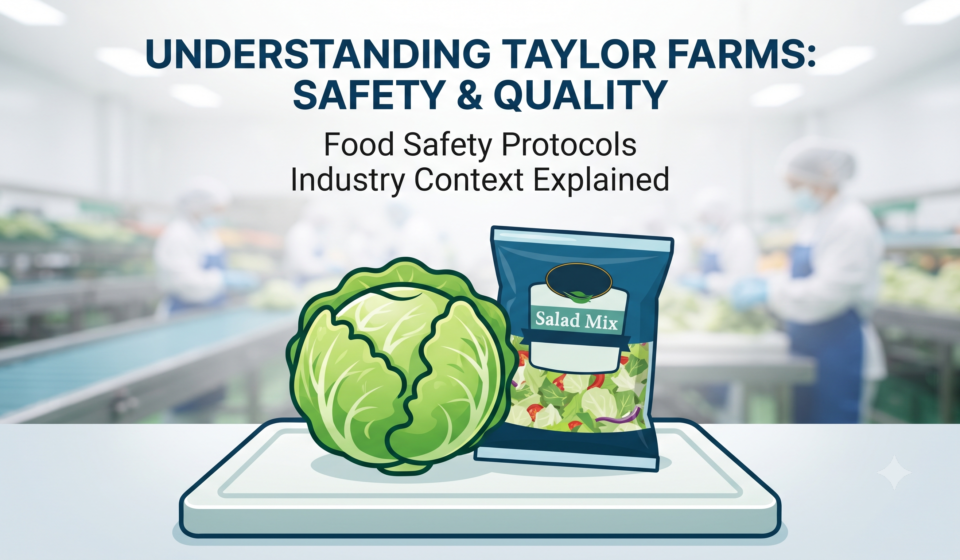

Taylor Farms is a household name in the fresh-cut produce industry, known for supplying some of the largest grocery chains and restaurant brands in North America. As the scale of their operations grows, so does public interest in their food safety protocols and supply chain transparency.
Whether you are a regular consumer of their popular bagged salad kits or interested in the complexities of large-scale agricultural distribution, understanding the company’s infrastructure is vital. This guide provides an in-depth look at Taylor Farms, how they manage food safety, and the context behind recent industry headlines regarding foodborne illnesses like Cyclospora.
Key Takeaways
- Industry Leadership: Taylor Farms is North America’s largest processor of salads and fresh-cut vegetables, headquartered in Salinas, California.
- Safety Commitment: The company employs advanced, USDA-verified wash systems (SmartWash®) and maintains rigorous third-party auditing to ensure compliance with global food safety standards.
- Outbreak Context: While the company has been linked to potential sources of foodborne illness in recent years, investigations are complex, often involving supply chain tracing across multiple states and growers.
- Consumer Awareness: Understanding how fresh produce is handled from “farm to table” is the best way for consumers to stay informed about their food sources.
What is Taylor Farms?
Founded in 1995 by Bruce Taylor, a veteran of the produce industry, Taylor Farms has evolved into a titan of the fresh food sector. The company’s growth strategy centers on providing fresh, convenient, and healthy options to busy families and high-volume foodservice providers.
Operations and Scale
With 26 processing plants across the United States, Taylor Farms manages a massive logistics network. Their facilities are designed to handle millions of pounds of produce weekly, ranging from iceberg lettuce to complex, value-added salad kits.
Sustainability and Innovation
Beyond food production, the company has made significant investments in renewable energy, including solar, wind, and combined heat and power (CHP) systems at their facilities. Their goal is to integrate energy independence with sustainable food processing, aiming for a lower environmental footprint across their supply chain.
Food Safety Protocols: How They Manage Risk
In the fresh-cut produce industry, food safety is the cornerstone of operations. Because leafy greens are consumed raw, the potential for pathogen exposure requires proactive, science-based intervention.
The Role of Technology
Taylor Farms utilizes the SmartWash® system, which is designed to monitor and adjust water chemistry continuously. This technology aims to prevent cross-contamination by maintaining precise levels of wash enhancers, ensuring that every batch of greens is cleaned to strict internal and federal standards.
The “Ten Building Blocks” of Safety
Taylor Farms follows a comprehensive framework to mitigate risks:
- Farm Selection: Rigorous vetting of growers’ history and practices.
- Water Monitoring: Testing irrigation water to prevent pathogen entry.
- Traceability: State-of-the-art tracking that identifies the harvest origin, time, and processing facility.
- Third-Party Audits: Ongoing inspections by external agencies to verify compliance with HACCP and GFSI standards.
Navigating Recent Concerns: The Cyclospora and Lettuce Context
In mid-2026, reports surfaced regarding a Cyclospora outbreak impacting several states, with some investigations pointing toward lettuce or salad greens as potential vehicles for the parasite. Cyclospora cayetanensis is a microscopic parasite that causes an intestinal illness known as cyclosporiasis.
Understanding Cyclospora
Cyclospora is typically transmitted through the consumption of water or raw produce contaminated with feces. Because it is a parasite rather than a bacteria, standard washing techniques are not always 100% effective, which is why prevention at the farm level—such as protecting water sources and ensuring worker hygiene—is so critical.
The Complexity of Investigations
When an outbreak occurs, public health officials, including the FDA and CDC, conduct “traceback” investigations. These investigations often rely on patient interviews to determine common food items. Because large suppliers like Taylor Farms distribute to many chains—such as Taco Bell—they are often part of the investigation process, even before a definitive source is identified.
Note: As of July 2026, investigations into specific food sources remain ongoing. Consumers are advised to follow official guidance from local health departments and the FDA regarding any food safety alerts.
How to Protect Yourself as a Consumer
While producers like Taylor Farms implement extensive safety measures, consumers can also take steps to reduce their own risk when handling produce.
- Wash Thoroughly: While bagged salads often claim to be “triple-washed,” a final rinse under clean running water can be an extra layer of protection.
- Practice Good Kitchen Hygiene: Always wash your hands before and after handling fresh produce to avoid cross-contamination from other kitchen surfaces.
- Stay Informed: Follow local news and official public health portals (like the CDC website) if there is an active investigation in your area.
- Temperature Control: Keep your greens refrigerated at 40°F (4°C) or below to slow the growth of any potential pathogens.
Conclusion
Taylor Farms stands at the intersection of modern agricultural efficiency and the immense challenge of maintaining safety in a complex food system. While they utilize state-of-the-art technology and rigorous audit processes, the nature of fresh produce means that risks like Cyclospora remain a concern for the entire industry. By maintaining transparency and continuing to invest in food safety innovation, large producers, regulators, and consumers work together to ensure the safety of our food supply.
FAQ
1. Is it safe to eat Taylor Farms products?
Taylor Farms follows strict, USDA-regulated safety procedures. However, as with all raw produce, there is inherent risk. Always check for official recall notices on the FDA website and follow local health guidance during active outbreaks.
2. What is Cyclospora?
Cyclospora is a parasite that causes gastrointestinal illness. It is most commonly spread through contaminated water or raw produce. Symptoms include watery diarrhea, cramping, and fatigue.
3. Does washing lettuce kill Cyclospora?
While washing helps remove dirt and debris, it may not remove all parasites, as Cyclospora can be difficult to eliminate from produce surfaces. Cooking produce to appropriate temperatures is the most effective way to kill the parasite.
4. How does Taylor Farms track their products?
The company employs advanced traceability systems that track produce from the specific field where it was grown, through the harvesting process, and into the processing facility.