
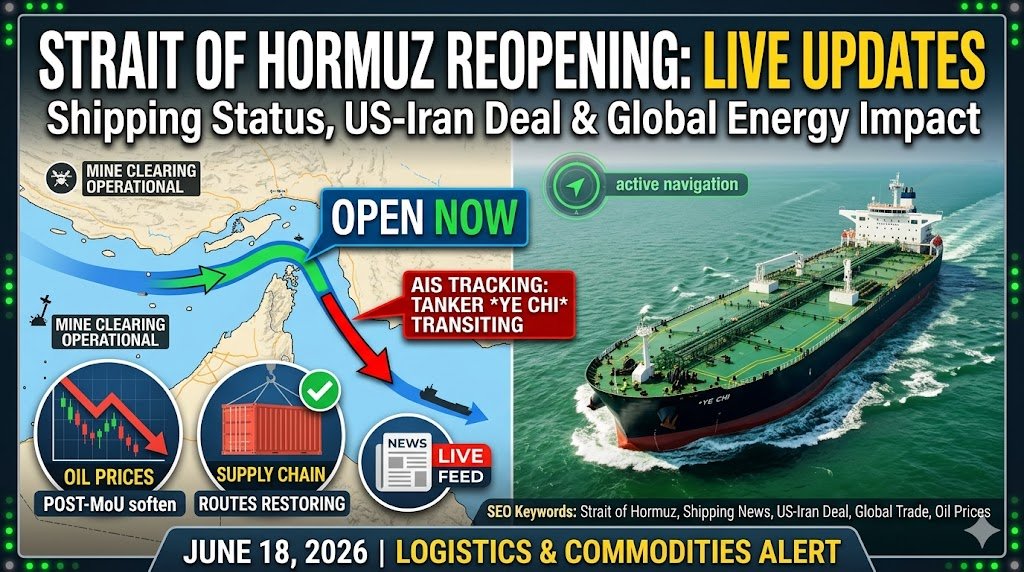

The global shipping industry is witnessing a historic turning point. Following months of severe maritime blockades and military conflict in the Middle East that began on February 28, 2026, the Strait of Hormuz is tentatively reopening.
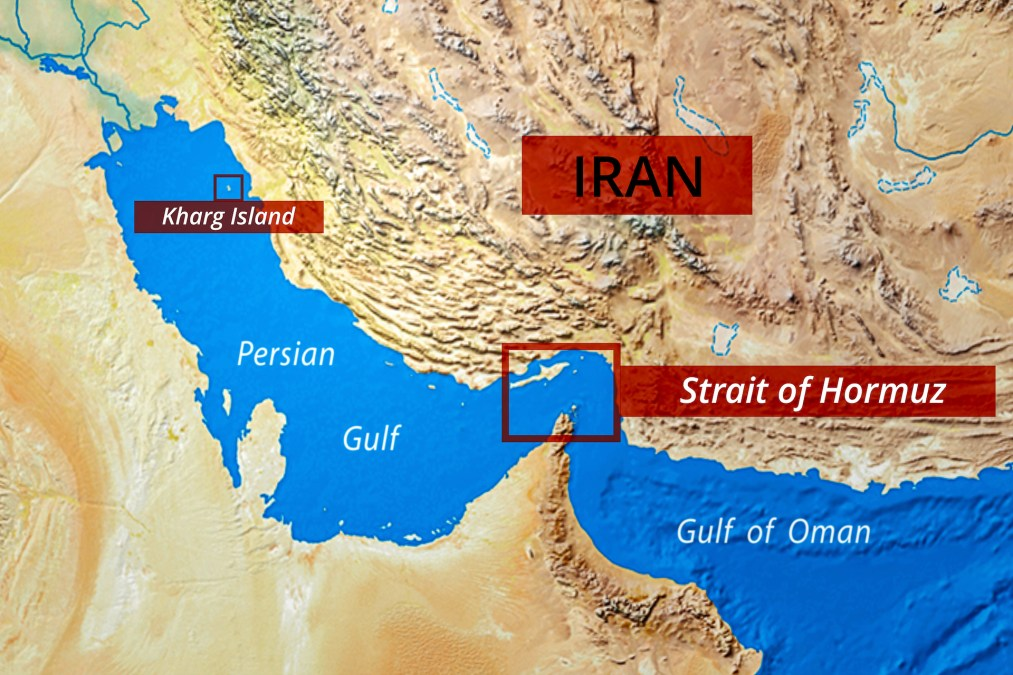
A newly brokered US-Iran Memorandum of Understanding (MoU)—signed in Islamabad—aims to defuse a crisis that crippled 20% of the world’s liquefied natural gas (LNG) and oil supply. However, deep structural tensions, mine-clearing timelines, and conflicting interpretations of the agreement between Washington and Tehran mean the shipping industry remains on high alert.
Live Status: June 18, 2026
- Waterway Status: Officially “Open” under the provisional Islamabad MoU, but highly restricted by ongoing technical, safety, and security operations.
- Vessel Movement: First commercial ships are actively surging out of the Gulf. AIS tracking data confirmed that the French-flagged LNG carrier Mraikh and the Hong Kong-flagged tanker Ye Chi successfully transited Iranian waters south of Larak Island. Five Chinese-affiliated vessels are also underway.
- Military Blockade: The United States has agreed to lift its naval blockade of Iranian ports completely within 30 days. In return, Iran must remove military impediments.
- The Mine Threat: Western maritime security agencies report that mine-clearing operations inside the Strait could take 40 to 50 days before normal, uninhibited commercial traffic can safely resume.
- Stranded Seafarers: Efforts have begun to evacuate an estimated 20,000 seafarers aboard 2,000 ships who have been stranded inside the Persian Gulf since the conflict broke out.
Key Takeaways of the 2026 US-Iran Peace Agreement
The Islamabad MoU creates a fragile 60-day negotiating window to finalize a permanent peace deal. The four core pillars impacting global logistics and commodities include:
- Immediate Ceasefire: A permanent halt to military operations on all fronts, including required mechanisms for Iran to de-escalate regional proxy alignments (such as Hezbollah in Lebanon).
- Reciprocal Access: Iran has agreed to make arrangements for the “safe passage of commercial vessels with no charge” for a initial 60-day period. Simultaneously, the US Treasury has issued immediate waivers on Iranian crude oil exports and associated banking/maritime logistics.
- Nuclear Compromise: Iran will down-blend its 440kg stockpile of highly enriched uranium on its own soil under the direct supervision of the UN’s International Atomic Energy Agency (IAEA).
- The Toll Disagreement: A major point of friction remains. The US insists transit must remain permanently toll-free via international channels. Conversely, Iran’s newly formed Persian Gulf Strait Authority (PGSA) claims it will work with Oman to manage traffic and collect fees for maritime “services.”
Economic Backlash: How the 2026 Crisis Shook Global Trade
The closure of the Strait of Hormuz in March 2026 triggered the largest disruption to the world energy supply since the 1970s. For over three months, global supply chains were forced to adapt to severe bottlenecks.
Supply Chain Impact Metrics
| Factor | Crisis Impact | Current Outlook (Post-MoU) |
| Crude Oil Prices | Surged toward $150 per barrel | Softening, but volatile due to lingering risks |
| Shipping Route Distances | Rerouting around Cape of Good Hope added ~3,500 nautical miles | Ships starting to return to shorter “Southern Highway” routes |
| Marine Insurance | War-risk premiums escalated by up to 400% | Insurance firms maintaining high rates until safety is verified |
| Tanker Traffic Volume | Dropped by roughly 70% in March, hitting near-zero by May | Gradual 30-day restoration toward pre-war baselines |
What Shippers and Shippers’ Alliances Say
Despite the diplomatic breakthrough, international maritime organizations remain highly conservative. Shippers across Asia and Europe have indicated they will not resume standard, high-volume schedules until naval coalitions formally guarantee that the chokepoint is clear of hidden ordnance.
Furthermore, think tanks like Chatham House warn that even if this specific deal holds, the geopolitical framework has permanently shifted. Iran has demonstrated its structural capability to sever global energy arteries at will, forcing multinational corporations to pivot toward long-term nearshoring, pipeline diversification, and strategic energy stockpiles.
Editor’s Note for Logistics Managers: Monitor live AIS transponder feeds and war-risk zone declarations before routing vessels through the Gulf of Oman. Mine-clearing assets are actively deployed but complete lane clearance is not expected until late July 2026.