
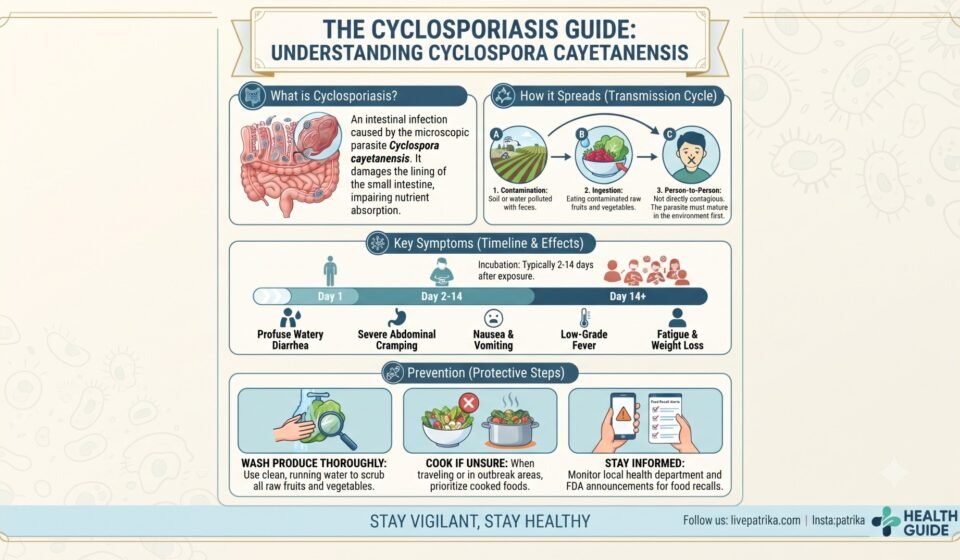

Cyclosporiasis is a significant intestinal illness caused by the microscopic parasite Cyclospora cayetanensis. While often associated with travel to tropical regions, outbreaks frequently occur globally through contaminated food and water supplies.
For many individuals, the illness can cause severe, lingering gastrointestinal distress. Understanding the transmission vectors, symptom profiles, and mitigation strategies is essential for public health awareness and personal safety.
Key Takeaways
- Pathogen: Cyclosporiasis is caused by the protozoan parasite Cyclospora cayetanensis.
- Transmission: It is transmitted via the fecal-oral route, typically through contaminated fresh produce or water.
- Common Symptoms: Profuse, watery diarrhea is the hallmark symptom, often accompanied by cramping, fatigue, and nausea.
- Diagnosis: Stool testing is required, as the parasite is not always visible on routine O&P (ova and parasite) exams.
- Prevention: Thoroughly washing produce and maintaining high standards of food hygiene are the primary defence mechanisms.
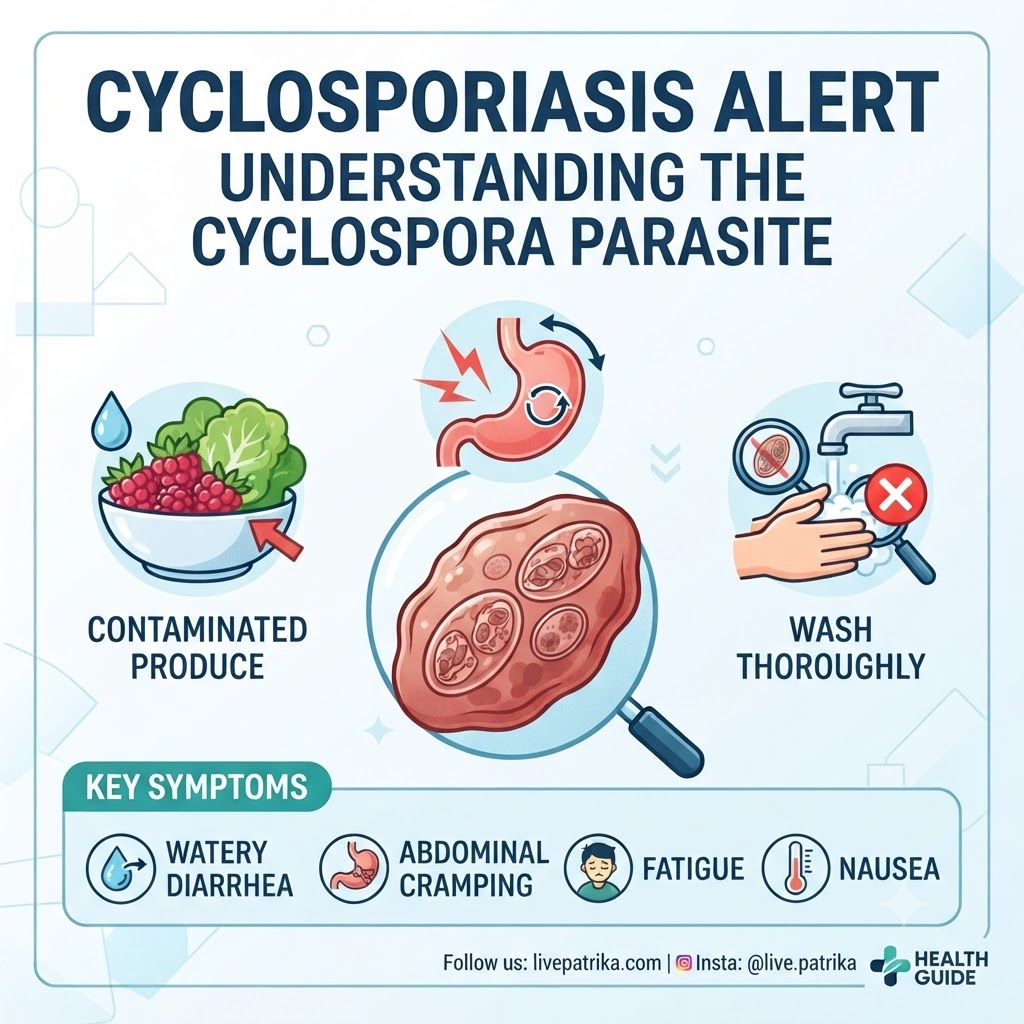
What is Cyclosporiasis?
Cyclosporiasis is an intestinal infection that targets the small intestine. Unlike some other foodborne illnesses that resolve in 24 hours, this infection often persists for weeks or even months if left untreated.
The Cyclospora Parasite
Cyclospora cayetanensis is a single-celled, microscopic organism. It is classified as an obligate parasite, meaning it requires a human host to complete its lifecycle.
Once ingested, the parasite invades the epithelial cells of the small intestine. This intrusion disrupts the body’s ability to absorb nutrients and leads to significant fluid loss.
Geographic and Seasonal Patterns
While the parasite is endemic in many tropical and subtropical regions, outbreaks occur worldwide. In the United States and Europe, infections often follow seasonal patterns, usually tied to the importation of fresh produce—such as cilantro, basil, lettuce, and raspberries—from regions where the parasite is prevalent.
Understanding Transmission: How Infections Spread
The transmission cycle of Cyclospora is strictly fecal-oral. This does not mean direct contact with feces, but rather the consumption of food or water that has been contaminated by trace amounts of human waste.
Contaminated Fresh Produce
The most common vehicle for Cyclospora is fresh, imported produce. Because the parasite is highly resilient and can survive in the environment for extended periods, it easily clings to the surfaces of leafy greens and soft berries.
Even with modern agricultural practices, these parasites are difficult to wash away completely. Because the produce is typically eaten raw, there is no “kill step” (like high-heat cooking) to neutralize the pathogen before it reaches the consumer.
Waterborne Transmission
Water supplies that have been contaminated by sewage or agricultural runoff serve as another primary source of infection. This is particularly concerning in regions where water filtration infrastructure is inadequate.
Individuals traveling to endemic areas should exercise caution regarding:
- Untreated tap water: Use only bottled or boiled water for drinking and brushing teeth.
- Ice cubes: Avoid ice in beverages, as it is often made from local tap water.
- Produce irrigation: Be wary of salads or raw vegetables washed in local water supplies.
Symptoms and Clinical Presentation
The onset of cyclosporiasis is not immediate. Unlike Salmonella or Norovirus, which often strike within hours, the incubation period for Cyclospora typically ranges from two to 14 days, with a median of about one week.
Primary Symptoms
Patients often report a sudden onset of symptoms, characterized by:
- Watery Diarrhea: Frequently explosive and frequent.
- Abdominal Cramping: Often described as sharp or bloating-related.
- Fatigue: Extreme malaise and loss of energy.
- Anorexia: Significant loss of appetite.
- Nausea and Vomiting: Though less common than diarrhea, these occur in a subset of patients.
Why the “Relapsing” Nature Matters
One of the most defining characteristics of cyclosporiasis is its tendency to wax and wane. A patient may feel like they are recovering, only for symptoms to return with renewed intensity several days later. This cycle can continue for weeks if the patient does not receive the appropriate antibiotic therapy.
Diagnosis and Medical Treatment
If you suspect you have contracted a parasite after experiencing persistent diarrhea, seek medical attention. Because Cyclospora is not detected in standard routine stool culture tests, you must specifically request testing for the parasite.
Diagnostic Challenges
Identifying Cyclospora is technically demanding. The organisms are small and do not always show up well under standard microscopy.
Clinicians may utilize:
- Modified Acid-Fast Staining: A specific dye process that makes the parasite more visible under a microscope.
- Molecular Testing (PCR): Polymerase chain reaction testing is the gold standard, as it detects the DNA of the parasite with high sensitivity and speed.
Standard Treatment Protocol
Because this is a parasitic infection, standard antidiarrheal medications (like loperamide) are usually ineffective and may even prolong the illness.
The treatment of choice is a combination of trimethoprim-sulfamethoxazole (TMP-SMX), commonly sold under brand names like Bactrim or Septra. Most patients show significant clinical improvement within 24 to 48 hours of starting the antibiotic course.
Preventive Measures and Food Safety
While food safety authorities work to regulate imports and improve supply chain hygiene, consumers play a vital role in prevention.
Kitchen Hygiene Strategies
- Scrubbing Produce: Use running water to scrub firm produce. While this does not guarantee the removal of all microscopic pathogens, it significantly reduces the surface load.
- Avoiding High-Risk Foods: During peak outbreak seasons, consider opting for cooked vegetables instead of raw salads when dining out.
- Separation: Use separate cutting boards for raw produce and meats to prevent cross-contamination.
Advocacy and Awareness
Public health officials monitor Cyclospora closely. Staying informed about current food recalls in your region is a proactive way to avoid exposure. If a recall is issued for a product you have recently consumed, monitor your health closely and contact a healthcare provider if gastrointestinal symptoms arise.
Conclusion
Cyclosporiasis is a persistent and uncomfortable parasitic infection that requires more than just “waiting it out.” Because of its complex lifecycle and resistance to traditional sanitation, understanding its transmission through fresh produce is the best way to safeguard your health.
If you experience prolonged, watery diarrhea following international travel or consumption of raw produce, do not hesitate to contact your doctor. With the right diagnostic approach and a targeted course of antibiotics, the infection is highly treatable, and full recovery is the expected outcome.
Frequently Asked Questions (FAQ)
1. How long does a Cyclospora infection last?
Without treatment, the infection can last for several weeks to months, often characterized by a “relapsing” pattern where symptoms disappear and return.
2. Is cyclosporiasis contagious from person to person?
No. Cyclospora is not directly contagious. The parasite must go through a maturation process in the environment (taking days or weeks) before it becomes infectious. You cannot catch it simply by being in the same room as an infected person.
3. Can I wash the parasite off my vegetables?
While washing produce reduces the amount of bacteria and parasites, it is difficult to remove Cyclospora entirely because of its microscopic size and ability to adhere to surfaces. Washing is helpful, but cooking produce to a safe internal temperature is the only way to ensure the parasite is killed.
4. Are there long-term health effects of the infection?
Most people recover completely with proper treatment and have no long-term health complications. However, prolonged illness can lead to significant dehydration and nutritional deficiencies if not addressed by a medical professional.