In a surprise development that eased global tensions, US President Donald Trump announced a provisional two-week ceasefire with Iran on April 7, 2026—just 90 minutes before a self-imposed deadline that had raised fears of devastating military strikes.
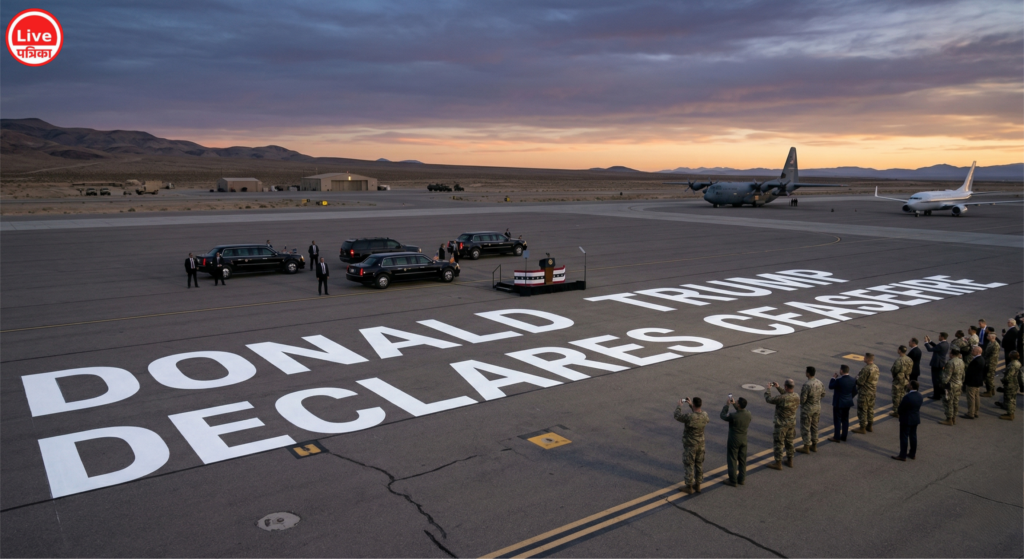
Trump had warned that failure to meet his demands could result in the destruction of “a whole civilization.” The agreement, mediated primarily by Pakistan, provides a temporary halt to hostilities that had disrupted shipping through the vital Strait of Hormuz and pushed the region toward a wider war.
Key Terms of the Ceasefire
The truce hinges on two main conditions:
- Reopening of the Strait of Hormuz: Trump insisted on the “complete, immediate, and safe opening” of the strategic waterway as a non-negotiable condition. Iran has agreed to permit safe passage for international shipping, though it will continue to coordinate transit through its armed forces.
- Iran’s 10-Point Proposal: In a notable shift, Trump described a 10-point peace plan conveyed by Iran through Pakistani channels as a “workable basis” for negotiations. The proposal reportedly includes demands for the lifting of US and secondary sanctions, the withdrawal of American forces from certain regional bases, and the release of frozen Iranian assets.
Direct Talks to Begin in Islamabad
The ceasefire is framed as a short-term “pause” rather than a final peace deal, intended to create space for diplomacy. Pakistani Prime Minister Shehbaz Sharif has invited delegations from the US and Iran to Islamabad, with high-level talks scheduled to start on Friday, April 10, 2026.
On social media, Trump expressed cautious optimism, stating that the two-week period would allow both sides to finalize an agreement. He suggested the region could enter a “Golden Age” marked by reconstruction and renewed international trade.
Differing Claims of Victory
As expected in such high-stakes diplomacy, reactions diverged sharply:
- US Perspective: Defense Secretary Pete Hegseth described the ceasefire as the outcome of a “decisive military victory” under Operation Epic Fury. The Pentagon claims US strikes destroyed around 90% of Iran’s conventional navy and key weapons production facilities, compelling Tehran to seek terms.
- Iranian Perspective: Tehran’s Supreme National Security Council called the development a “historic victory,” asserting that the United States was forced to accept core Iranian demands, including aspects related to uranium enrichment (though translations of the agreement differ between English and Farsi versions).
- Israeli Stance: Prime Minister Benjamin Netanyahu welcomed the de-escalation with Iran but stressed that the ceasefire does not extend to Lebanon. Israel indicated it would continue operations against Hezbollah, underscoring the limited scope of the current truce.
Immediate Market Reactions
Financial markets responded positively to the news. Oil prices, which had surged amid fears of a prolonged blockade in the Persian Gulf, fell sharply. Global stock indices rose as the immediate risk of broader conflict—including potential nuclear dimensions—receded.
However, analysts cautioned that significant uncertainty persists. Shipping companies remain wary of navigating the Strait of Hormuz due to concerns that coordination fees or “tolls” paid to Iranian forces could breach existing US sanctions.
What Lies Ahead?
Attention now turns to the upcoming talks in Islamabad. Skeptics argue that two weeks is too brief to resolve deep-rooted animosities and complex issues surrounding Iran’s nuclear program. Supporters of the Trump administration hail the move as a successful example of “peace through strength,” crediting firm military pressure for bringing Iran to the negotiating table.
As delegations prepare to meet on April 10, the central question remains: Does this ceasefire mark the start of a genuine path toward lasting stability in the Middle East, or is it merely a brief calm before renewed tensions?
Live Patrika will continue to monitor developments from Islamabad and provide updates as they emerge.
Visit Boundlock for more.