Watch: Construction Launches in the White House East Wing, Demolition has commenced on sections of the East Wing of the White House to make way for a new ballroom envisioned by U.S. President Donald Trump.
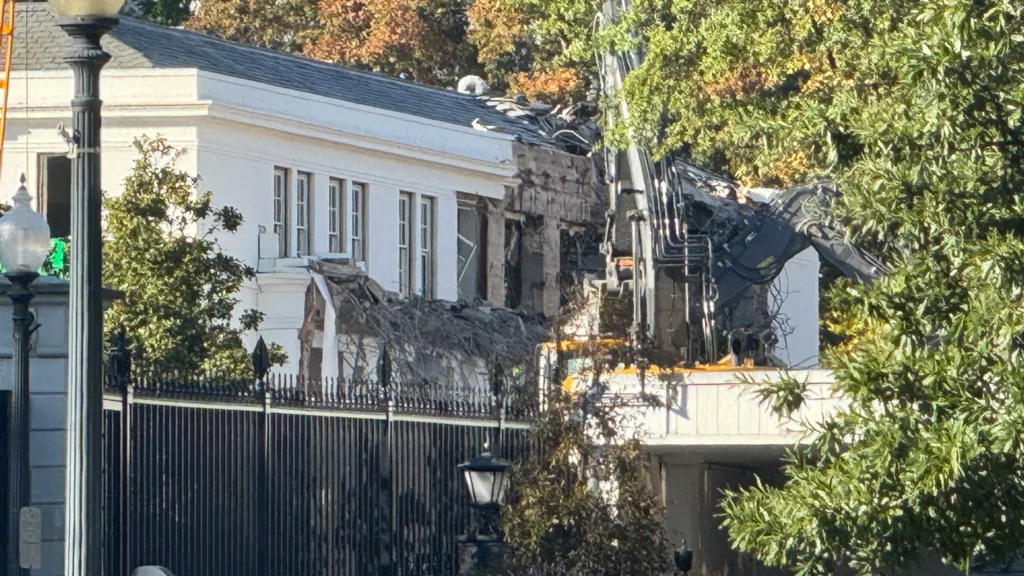
On Monday, construction teams removed significant areas of a covered entrance and windows, part of Trump’s plan to “fully modernize” the space.
The president previously stated that his proposed $250 million (£186 million) ballroom will be constructed “near” the current East Wing, ensuring it won’t alter the existing structure.
“It won’t interfere with the current building. It will be adjacent but not in contact with it, and it respects the existing architecture, which I admire greatly,” Trump stated in July, expressing his affection for the White House.
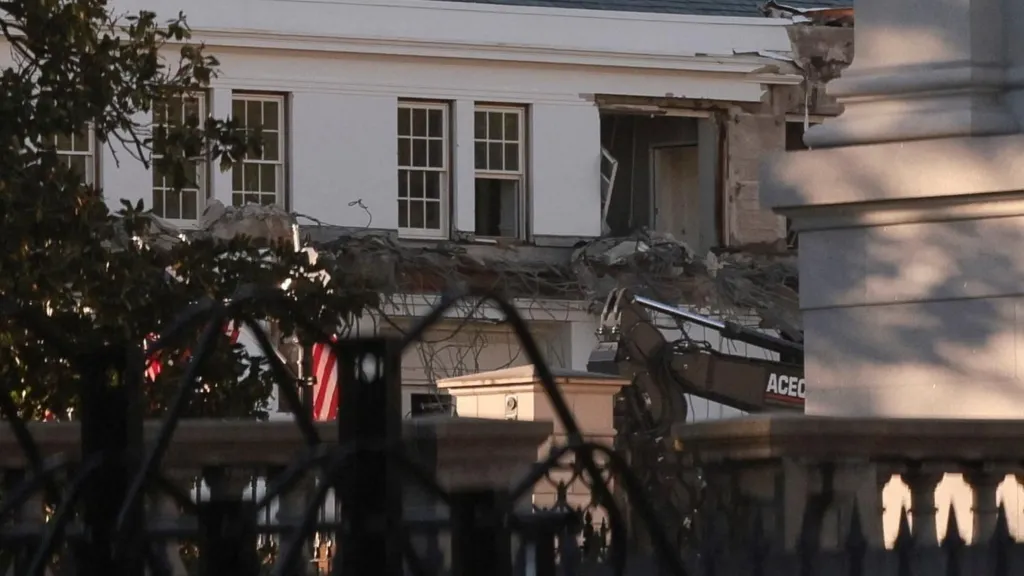
In a social media announcement, Trump revealed that “ground has been broken” for the “much-needed” ballroom.
“For over 150 years, every president has dreamed of having a ballroom for grand occasions and state visits at the White House,” he noted.
Recent images showed construction equipment, some decorated with U.S. flags, around the East Wing.
Trump explained that the East Wing is regarded as “completely separate” from the White House, despite its connection to the main building. The south side’s covered entryway appeared to be undergoing substantial alterations, with debris and metal cables visible from a distance.
Controversies Surrounding Preservation
While the National Park Service (NPS) oversees the White House and its grounds, the president possesses considerable authority over renovations.
Robert K. Sutton, former chief historian of the NPS, emphasized that any construction at the White House typically raises public concern.
“There’s been controversy surrounding the White House since its inception,” Sutton mentioned.
The NPS employs strict guidelines and reviews for construction projects, which were not reportedly followed in this instance.
“This building is of immense importance — it’s arguably the most significant executive building in the world — yet there’s a lack of transparency regarding this project, which is problematic,” he stated, noting various estimates of how many guests the ballroom might accommodate, ranging from 600 to over 900.
The White House has released preliminary designs that hint at the ballroom’s grandeur, featuring seating for hundreds and elegant chandeliers.
Trump has met with representatives from the National Parks Service and the U.S. Secret Service regarding the project, with Clark Construction leading the effort and McCrery Architects handling the design. The Secret Service will also implement necessary security upgrades.
Jim McCrery, head of McCrery Architects, expressed his commitment to maintaining the classical style and historical integrity of the building during this renovation.
Sutton warned of the potential haste in the review process, suggesting it may prioritize Trump’s personal style over historical preservation.
“It’s always been referred to as the People’s House,” he remarked.
This year, Trump has made several modifications to the White House, including redecorating the Oval Office with gold accents and replacing grass in the Rose Garden with concrete for additional seating.
Historical Context of Presidential Changes
The latest renovation efforts have garnered criticism from the Society of Architectural Historians, which voiced concerns about the proposed ballroom, labeling it the first significant exterior change since 1942.
The American Institute of Architects also urged for a more transparent review process.
Historically, Trump isn’t the first president to influence the White House’s design. Barack Obama transformed the tennis court to also accommodate basketball, while Richard Nixon repurposed the original swimming pool into the White House Press Room, where briefings are now held.
Originally installed for Franklin D. Roosevelt in 1933 to aid his polio recovery, the indoor pool was ultimately closed, leading to an outdoor pool installation by Gerald Ford in 1975.
Harry Truman oversaw one of the most significant renovations between 1948 and 1952, necessitating his temporary relocation from the White House during extensive repairs.
- Indian Rupee Hits Record Low Past 93 Against US Dollar: What’s Fueling the Crash?
- Pakistan-Afghanistan Conflict: 3 Critical Risks as Airstrikes Strike a Hospital
- Harish Rana: A Decade of Silence
- Epstein Files: 2026’s Massive 3-Million-Page Disclosure and Its Global Impact
- Union Budget 2026: Key Highlights, New Tax Slabs, and Sectoral Impact